How AI-powered tools are reshaping productivity, project management, and the workplace hierarchy.
TL;DR
AI isn’t just replacing tasks — it’s reorganizing the entire way we work. From scheduling meetings to managing projects, intelligent tools are quietly becoming our new middle managers. This shift promises efficiency but raises deeper questions: what happens when productivity itself is automated, and our value is no longer measured by how we work but by how we collaborate with machines?
The Rise of the Algorithmic Assistant
Once upon a time, productivity meant discipline — keeping lists, sending reminders, and managing the ticking clock. Now, it’s an algorithm’s job. Our calendars suggest meeting times, AI assistants summarize discussions, and chatbots schedule follow-ups before we even think to ask. What began as convenience has become an invisible workforce: a digital ecosystem that anticipates, organizes, and optimizes human effort.
We used to manage our tools. Now our tools manage us.
In 2025, AI productivity platforms like Notion AI, Microsoft Copilot, and Google’s Gemini Workspaces aren’t just organizing data — they’re shaping how teams collaborate. They’re prioritizing tasks, distributing workloads, and even nudging users toward “focus time” or “deep work.” The result is an unprecedented level of coordination — but also an emerging question of control. When an algorithm decides your priorities, whose goals are you really pursuing?
From To-Do Lists to Decision-Makers
The role of AI in productivity software has evolved from helper to orchestrator. It’s no longer just keeping track of what you do — it’s suggesting what you should do next. Task management tools now predict which deadlines you’re likely to miss, which projects need more attention, and which colleagues are most efficient collaborators.
This level of automation blurs the line between personal assistant and project manager. The machine doesn’t just take notes — it interprets them, analyzes trends, and generates reports that shape managerial decisions. Entire layers of middle management are quietly being compressed into dashboards and automated workflows. The traditional hierarchy, once built on oversight and delegation, is now being re-coded into algorithms.
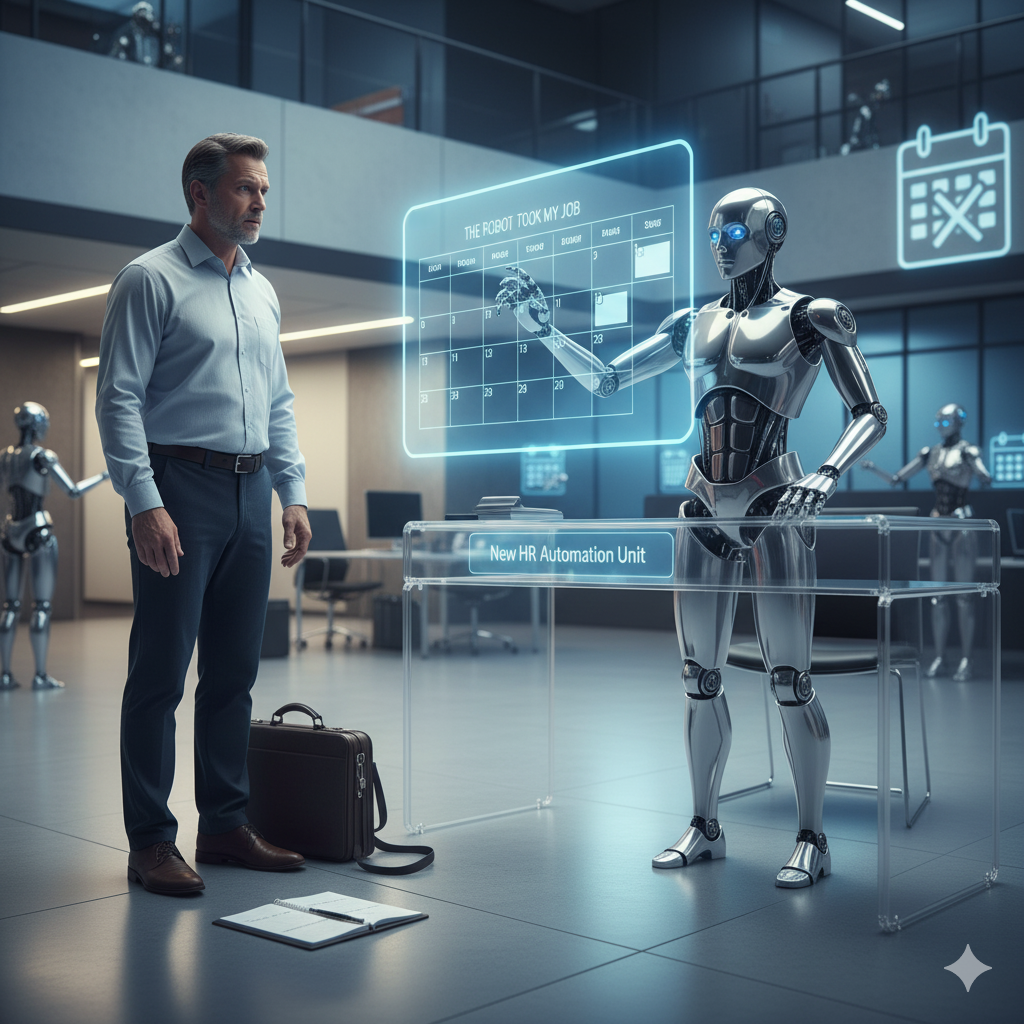
The phrase “The robot took my job” used to mean factory displacement. Today, it can just as easily describe an office worker watching a workflow AI automate their role in coordination, reporting, or communication.
The Death of the Micromanager (and the Birth of the Macro-AI)
In traditional organizations, power often resided with those who controlled information — the ones who knew who was doing what, when, and how. But AI platforms now have perfect visibility. Every click, message, and milestone becomes data. The new manager isn’t a person; it’s a dashboard.
Ironically, this can both flatten and reinforce hierarchy. On one hand, AI levels the field — junior employees can be just as efficient with the right tools as experienced ones. On the other, it introduces a new, impersonal kind of authority: the algorithmic boss. The machine doesn’t care about intent or intuition — only measurable outcomes.
The workplace is evolving from a web of human relationships into a network of data streams, optimized for efficiency but stripped of nuance. This shift may boost output, but it risks eroding the trust and mentorship that once defined good management.
Productivity Without People
Perhaps the most unsettling trend is the automation of meta-work — the work about work. Meetings, scheduling, task assignment, and communication — once seen as human coordination — are now handled by AI. Slack bots summarize discussions; Google Meet transcribes and action-tags conversations; project tools auto-update progress reports.
It’s efficient, yes — but what happens to the invisible labor that once built team culture? The small talk before a meeting, the impromptu brainstorm, the sense of shared struggle — these aren’t inefficiencies, they’re the social glue of collaboration. When AI trims them away in the name of productivity, we risk creating a workplace that’s efficient but empty.
AI doesn’t tire, but it also doesn’t care. And without care, the workplace risks becoming a sterile environment where communication is transactional and human connection is a variable to optimize.
The Human Resistance: Creativity, Context, and Chaos
There’s still one thing AI hasn’t mastered — and may never: human messiness. Creativity, intuition, and emotional intelligence thrive in ambiguity. Where AI seeks order, humans often find meaning in chaos.
The best teams aren’t perfectly automated; they’re imperfectly inspired. They thrive on leaps of imagination, serendipitous discoveries, and emotional empathy — all the things that don’t fit neatly into a productivity graph.
As AI continues to optimize work, the most valuable employees will be those who break patterns — not follow them. The future of productivity isn’t about who works hardest, but who can think beyond the system’s logic.
The Calendar as a Mirror
The corporate calendar, once a simple tool, has become a microcosm of automation’s influence. AI now decides when we meet, for how long, and with whom. It learns our habits, preferences, and even moods.
But here’s the subtle danger: the more predictive it becomes, the less we act with intention. If the AI schedules our day for us, when do we choose to pause, to reflect, to rebel? The automation of time management risks automating time itself — transforming our days into machine-optimized sequences of tasks, stripped of spontaneity.
Your calendar isn’t just a record of what you do. It’s a reflection of who you are. When the algorithm takes over that schedule, it begins to shape identity itself — one “optimized slot” at a time.
The End of Busywork — and the Birth of Meaning Work
Ironically, AI might save us from the very thing it threatens. By taking over the repetitive and administrative parts of work, automation can free humans to focus on what truly matters: strategy, innovation, and human connection.
But this only happens if we let it. Too often, organizations use automation to increase output, not insight. Instead of freeing people to think, they double workloads and compress timelines, chasing efficiency over meaning.
The challenge ahead isn’t technological — it’s philosophical. We must redefine productivity not as “doing more” but as “doing better.” The measure of success shouldn’t be the number of tasks completed, but the quality of thought and creativity that automation enables.
A New Hierarchy: Human Above the Algorithm
So, where does this leave us? The robot may have taken your job and your calendar, but it doesn’t have to take your agency. The future of work belongs to those who can direct the machines, not just work alongside them.
Leadership in the AI era will mean understanding systems — but leading people. It will mean questioning what the algorithm values, and ensuring it aligns with human ethics and empathy. It’s not about fighting automation, but governing it wisely.
The greatest risk isn’t that AI will dominate work, but that we’ll forget why we work. Automation can manage processes — but only humans can define purpose.
Reclaiming Time
The robots may organize our calendars, but only we can decide how to fill them. The next phase of productivity won’t be about speed, efficiency, or output — it will be about intentionality.
As we step further into this automated age, our most radical act may be to pause. To take back unstructured time. To think, reflect, and connect. In a world run by algorithms, slowing down isn’t laziness — it’s rebellion.
After all, the future of work won’t be defined by machines that think faster — but by humans who think deeper.